- TV Video Cables & Interconnects Items
- sku: 2937985455395651
- TRIBUTARIES 4AO-020D
4AO-020D TRIBUTARIES Toslink Fiber Optic Cable
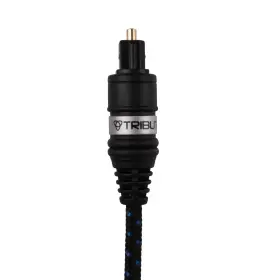
| Brand | TRIBUTARIES |
|---|---|
| Manufacturer Part Number | 4AO-020D |
| Type | HOME WIRING AUDIO CABLES |
| Bullet Point1 | MACHINE POLISHED CONVEX LENSES |
| Bullet Point2 | 1MM SINGLE-CORE PLASTIC OPTICAL FIBER |
| Bullet Point3 | HIGHLY REFLECTIVE POLYETHYLENE CLADDING |
| Bullet Point4 | TOSLINK SJ15 CONNECTOR WITH MOLDED COVER |
| Bullet Point5 | DECORATIVE WOVEN JACKET OVER HIGHLY FLEXIBLE BLACK PVC JACKET |
| UPC | 805696014870 |
Review TRIBUTARIES 2-meter Series Toslink Fiber Optic Cable
The Tributaries 4AO-020D 2-meter TOSLINK Fiber Optic Digital Audio Cable is a high-performance, optical digital audio interconnect designed to deliver pristine, uncompressed audio signals between AV components. This 2-meter (6.6 ft) cable employs TOSLINK technology, ensuring reliable data transmission and maintaining the integrity of the audio signals during transmission. With a fiber optic design, it is ideal for long-distance runs where traditional coaxial or twisted-pair copper cables may experience signal degradation.
The 4AO-020D features a durable, lightweight design, made possible by its TPE jacket that protects the inner conducting fibers from potential damage. The optical fibers themselves are composed of 100% pure silica, ensuring maximum signal clarity and uncompromised sound quality. A precision-molded stainless steel connector at each end ensures a secure and stable connection to AV components, and the gold-plated phosphor-bronze TOSLINK plug contacts provide excellent conductivity and corrosion resistance.
The Tributaries 4AO-020D fiber optic cable is compatible with various audio applications, including digital audio sources and sinks, such as Blu-ray players, digital TVs, CD players, and digital soundbars, as well as Dolby Digital and DTS surround sound decoding. The cable is also capable of transmitting high-resolution audio formats, such as Dolby TrueHD, DTS-HD Master Audio, and MLP (Multiple Lossless Packet Audio). With its high bandwidth capacity, low jitter, and minimal signal loss, the Tributaries 4AO-020D 2-meter TOSLINK Fiber Optic Digital Audio Cable is an excellent choice for audiophiles seeking exceptional sound quality and a long-lasting, reliable connection.
Tributaries 4AO-020D 2-meter Toslink Fiber Optic Cable: Pros, Cons, and Recommendation
The Tributaries 4AO-020D 2-meter Toslink fiber optic cable is designed for audio transmissions between components, promising minimal signal loss and superior sound quality through fiber optic technology. In this analysis, we will discuss the advantages and disadvantages of using this cable, ultimately providing a recommendation.
Pros:1. Superior Signal Transmission: Toslink fiber optic cables employ light signals instead of electrical connections for data transmission. As a result, there is no potential for electrical interference, ensuring exceptionally clear audio quality.
2. Minimal Signal Loss: The light signals in fiber optic cables experience significantly less signal loss compared to traditional analog cables, granting uninterrupted transmission when extended lengths are involved.
3. Reduced Electromagnetic Interference (EMI) and Radio-Frequency Interference (RFI): Fiber optic cables are immune to electromagnetic and radio-frequency interference, which dramatically decreases the likelihood of experiencing any disruption in the quality of the sound transmission.
4. Durability: Fiber optic cables are less susceptible to damage due to their robust design and the inherent solidity of fiber material.
5. Increased Compatibility: Toslink fiber optic cables can function as both digital audio and S/PDIF (Sony/Philips Digital Interface Format) cables, providing adaptability across different devices and systems.
Cons:1. Cost: Fiber optic cables tend to be more expensive than standard analog cables due to the advanced technology involved in their design and manufacturing.
2. Installation Complexity: Since fiber optic cables require a dedicated fiber optical to electrical converter, the installation process can be more intricate and may necessitate the assistance of a professional or increased user competence.
3. Lack of Standards Compliance: Unlike traditional digital optical cables which comply with S/PDIF standards, fiber optic cables are not as universally compatible. Still, it's essential to verify compatibility between devices before making a purchase.
4. Limited Distance Capabilities: Although fiber optic cables offer less signal loss, they do not support the same distance capabilities as analog cables. Instead, they may require the use of repeaters to expand transmission ranges.
Recommendation:The Tributaries 4AO-020D 2-meter Toslink fiber optic cable is a sound investment for individuals who prioritize unparalleled signal transmission, excellent immunity to electromagnetic and radio-frequency interference, and potential cable durability. The primary drawbacks of increased cost, installation complexity, and limited compatibility primarily concern users who may not require the specific benefits offered by a fiber optic cable. Therefore, the recommendation comes down to the individual's personal preferences and priorities:
1. If you demand reliable connectivity and audio quality over extended distances while minimizing susceptibility to interference and signal loss, the Tributaries 4AO-020D Toslink fiber optic cable is likely the ideal solution.
2. If you work with a limited budget, traditional digital optical or S/PDIF cables may be more suitable.
3. Consider the system's compatibility with the cable, as well as the transmission length and complexity involved in installation.
4. Keep in mind the added benefits of fiber optic technology, such as improved durability and overall signal quality, before making a choice.
Details:
The constant thickness improves losses due to attenuation. Tributaries 4AO-020D 2 meter series 4 toslink fiber optic cable, cables are single mode plastic optical fiber made from 1mm crystal-clear cores surrounded by a highly reflective cladding and protective jacket. This procedure ensures less than 0.1db loss at each termination. The cladding and jacket are applied in concentric layers during the drawing process to prevent damage fiber that may occur a 2 step.
The 4ao has highly polished termination ends that resemble the convex look of a camera lens to ensure maximum signal transfer.
specifications vcinterconnects:
- brand: Tributaries
- mpn: 4ao-020d
- type: Home Wiring Audio Cables
- bullet point1: Machine Polished Convex Lenses
- bullet point2: 1mm Single-core Plastic Optical Fiber
- bullet point3: Highly Reflective Polyethylene Cladding
- bullet point4: Toslink Sj15 Connector With Molded Cover
- bullet point5: Decorative Woven Jacket Over Highly Flexible Black Pvc Jacket
- upc: 805696014870
offer vcinterconnects:
- started: december 21, 2024
- sold #: 25
- availability: in stock
- options: ship-to-home
- in stock #: 5
- prices: $38.00–$74.00
- item condition:
- New
- Open box
- Used
seller vcinterconnects:
- # reviews: 22960
- rating: 99.4%
- city: springfield, missouri
shipping vcinterconnects:
- class: standard, expedited, one-day
- type: fixed
- service: standard, expedited, overnight
- transit: 6-6 days
returns vcinterconnects:
- time: 30 days
- policy: returns accepted
- method: money back
- paid by: seller
general vcinterconnects:
- category: Electronics > Tv, Audio > Accessories > Video Cables Interconnects
payments vcinterconnects:
- wallet: paypal
- credit card: diners-club
- other
Similar Items:
- Tributaries Uhdm-005d-uob Uhdm Max 48g Hdmi Cable 0.5 Meters Dynamic Hdr Resolutions Of Extreme precision engineering and advanced testing was done to perfect the max cable performance. Highlights -:: Tributaries ADM maximum 48G ultra HDMI cables provide the best performance available anywhere. Strength and protection were built into every connector with Tributaries full body armor ...(December 19th, 2023)
- Tributaries 4abm-010b 4abs-010b Series 4 Balanced Xlr Stereo Audio Cable 1 Meter Each 3 available, Tributaries 4ABM-010B series 4 balanced mono audio cable 1 meter, embark on an extraordinary auditory journey with the 4ABM. The 4ABM is terminated with premium XLR connectors, meticulously hand-soldered using high-quality lead-free solder. Lupe insulation minimizes distortion while ...(February 11th, 2024)
- Tributaries 4sp-b-100d-uob 4sp-b-100d 10 Foot Series 4 Star-quad Speaker Cable Used Open Box Tributaries series 4 star-quad design results in a high performance speaker cable that looks as good it sounds, the speaker is stocked. In the star-quad design magnetic distortion is canceled by twisting strands clockwise and then wrapping bundles counter-clockwise around one insulated large solid ...(April 19th, 2024)
- Tributaries 2yp-mffb 2yp-mff 3.5mm Stereo To L r Rca Female Y Adapter Cable 9 Inch Lot 3 The package includes a lot of three units manufactured in china. The cable is 9 inches long and consists of 22 wag gauge wires with a black color finish. This cable does not come with any manufacturer warranty. The rca female l/r connectors provide a high-quality sound output. It is perfect for TV, ...(June 28th, 2024)
- Tributaries Uhdm-025d-uob Uhdm Max 48g Hdmi Cable 2.5 Meters 8k60 4k120 10k Supports Earc The ADM delivers dynamic Dr, resolutions of 8K60, 4K120 and 10K; supports ARC, quick media switching qms, auto low latency mode all, variable refresh rates VR frame transport ft. Highlights -:: Tributaries ADM maximum 48G ultra HDMI cables provide the best performance available anywhere. The power ...(August 15th, 2024)
- Tributaries 2ad-020d 2-meter Series 2 Digital Audio Cable Dual shielding blocks noise from entering the signal path. The series 2 digital audio cables begin with ultra-pure oxygen free copper PFC developed specifically for audio applications. Tributaries series 2 precision 75 ohm engineering provides accurate digital audio performance. To maintain a ...(November 15th, 2024)
- Tributaries Uhd48-015d Uhd48 Series 48g Hdmi Cable 1.5 Meters 8k60 4k120 And 10k Strength and protection were built into every connector with Tributaries full body armor shielding. The power grip connection not only maintains positive top and bottom fit but left right too; the connector stays put in precise location even when installed a movable display. The UHD48 delivers ...(November 19th, 2024)
- Tributaries Uhd48-005d Uhd48 Series 48g Hdmi Cable 0.5 Meters 8k60 4k120 And 10k The power grip connection not only maintains positive top and bottom fit but left right too; the connector stays put in precise location even when installed a movable display. Strength and protection were built into every connector with Tributaries full body armor shielding. Highlights -:: ...(November 21st, 2024)
- Tributaries 6p-iec-060d 6 Feet Series Professional Level Audio Power Cable Alternating the twists cancels out magnetic fields eliminating distortion. Designed exclusively for Tributaries by jay victor these cables are designed primarily low frequency signals of 50/60HZ with conductor size and gauge combinations specific this purpose. Magnetic fields are created when ...(November 24th, 2024)
- Tributaries Uhdm-020d Uhdm Inch Maximum 8k 10k 48gps Ultra Hdmi 2.1 Cable 2m 6ft6 Earc The Tributaries ADM cables are designed to meet all the requirements of HDMI 2.1. For your consideration is a very lightly used 2m 6'6 Tributaries ADM maximum 8K/10K 48GPS ultra HDMI 2.1 cable in excellent condition. This includes transporting HDMI signals up to 48 GPS, frame rates 120HZ, color ...(December 20th, 2024)
- Tributaries 4a-020d Series 4 Single-ended 2-meter Audio Cable The series 4 single-ended audio cable is. The series 4 single-ended rca cable is a high performance that looks as good it sounds. The signal conductors are wrapped with dual shielding to keep noise from reaching the single path. Highlights -: precision twisted solid 22AWG HX-PFC conductors, improved...(December 23rd, 2024)
